
Every woman deserves the full facts before the first feed.
Told in time.

Safety. Evidence. Choice. Consent.
The NHS must provide women with information so they can make informed choices about their care, as part of its duty to ensure informed consent. With infant feeding it doesn't deliver. Women are making choices about how to feed their babies without the full facts, and only finding out what they need to know once they’re already struggling.
SAFETY
Told in time to recognise if her baby isn't getting enough milk
Newborn admissions for jaundice have more than tripled since 2008, and feeding problems have risen too. Women report not being told how to recognise when their baby isn't getting enough milk. National admissions data does not even record how these babies were fed. Why aren't we investigating?
EVIDENCE
The Baby Friendly Initiative is promoted across the NHS without good evidence it improves wider maternal and infant health outcomes in the UK. Parents are warned about risks of formula feeding without being told how likely they are, while guidance on formula top-ups suggest impacts on breastfeeding that recent trials haven't shown. Women and health professionals deserve better.
Told what’s known, not what’s assumed
CHOICE
Told about every option, with equal respect
One option isn't a choice. Breastfeeding, formula and combination feeding are all real options with their own advantages and disadvantages, and women deserve information about each one, delivered proactively and without judgement on what is "best". What's best is what works for that woman.
CONSENT
Before any treatment, patients hear the risks and alternatives first - the standard set by the Supreme Court. Yet infant feeding is treated differently. Women are seldom given all of the information they need in advance. Information that comes after she's chosen can't inform choice.
Told before deciding, not after
IN THEIR WORDS
“I was not told that insufficient breastfeeding causes jaundice and dehydration and could result in my baby being hospitalised... which is what happened.”
Nobody told us.
“We were explicitly told by the midwife that under the NHS they cannot promote formula feeding or discuss it with [you]”
“They told us all about breastfeeding but when I asked about formula feeding and combi feeding I was told they weren’t allowed to tell us anything about it”
Four changes, so every woman is Told in time.
We're asking the UK and the devolved Governments, working with their health services, to:
Bring infant feeding into line with informed consent
01
Every woman should receive balanced, proactive information about breastfeeding, formula and combination feeding before birth, including benefits, risks and reasonable alternatives. NICE guidance should support this for all women, and decisions should reflect each woman's circumstances, health and wishes.
Measure what matters
02
Judge infant-feeding care by maternal and infant health outcomes, not breastfeeding rates alone. Investigate rising neonatal admissions across all four UK nations, including whether inadequate milk intake contributes, and ensure feeding method and weight loss are recorded consistently.
An urgent, independent review of infant feeding policy
03
Commission an urgent, independent review of infant feeding policy, free from institutional and commercial conflicts of interest. Until it reports, suspend further requirements for Baby Friendly Initiative accreditation and pause targets to reduce formula supplementation.
Protect families from formula marketing
04
Implement the Competition and Markets Authority's recommendations, including stronger controls on follow-on formula marketing. Ensure every woman receives impartial, brand-free NHS information about formula, including that the cheapest meets her baby's needs just as well as the dearest.
THE EVIDENCE
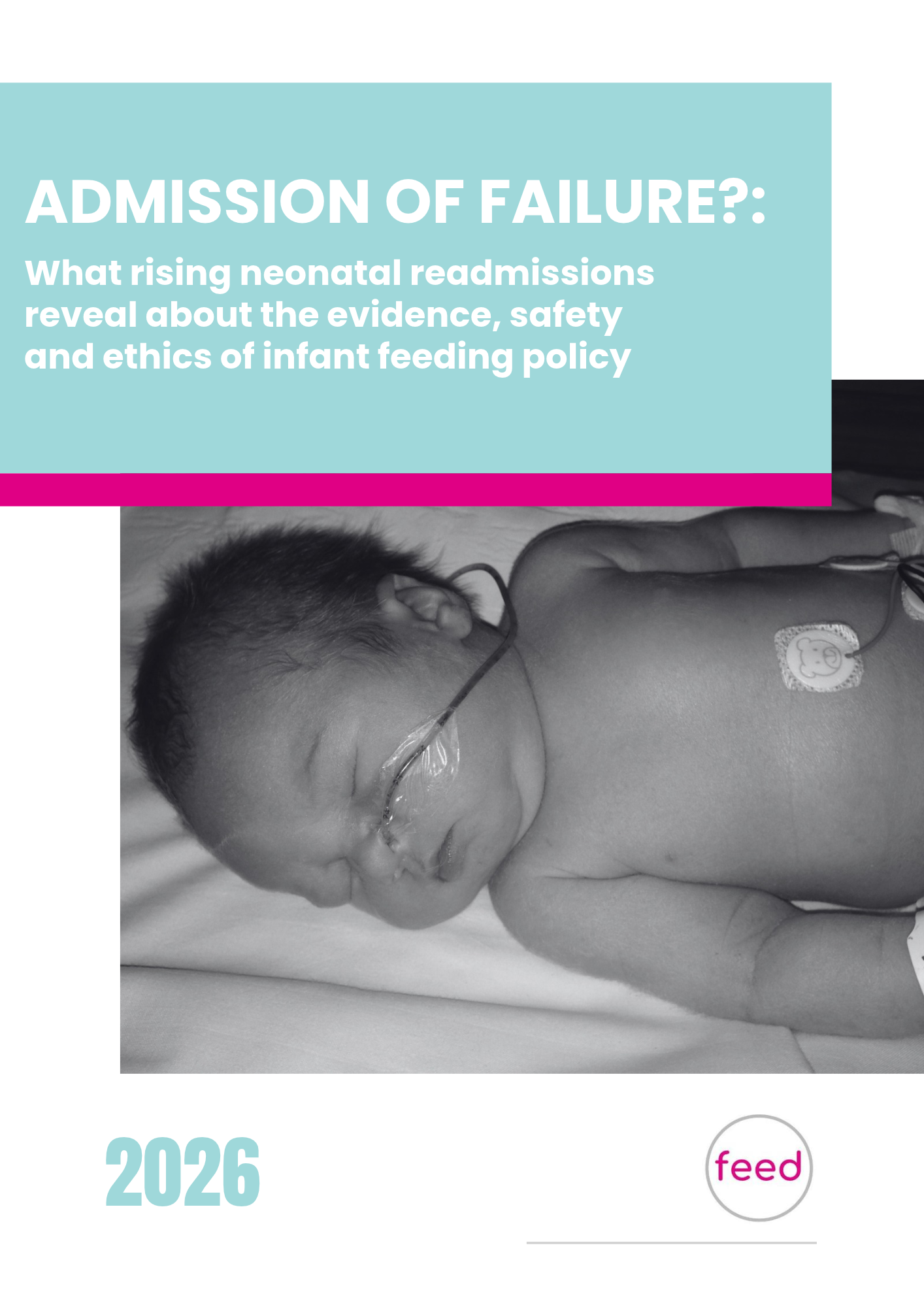
Admission of Failure?
In 2024 there were over 26,000 hospital admission episodes for jaundice among newborns in England – more than three times the number in 2008. Mums have changed; more have risk factors for a delayed milk supply including that they’re older, and have more caesareans. Infant feeding policy hasn’t changed with them.
Admission of Failure? sets out what the data shows, what NHS policy actually says and what women told us, in their own words. We're not claiming to know what's driving the rise. But why aren't we investigating whether feeding difficulties are part of the picture? That's the failure.
File on 4 Investigates: Feeding - are babies getting the best start?
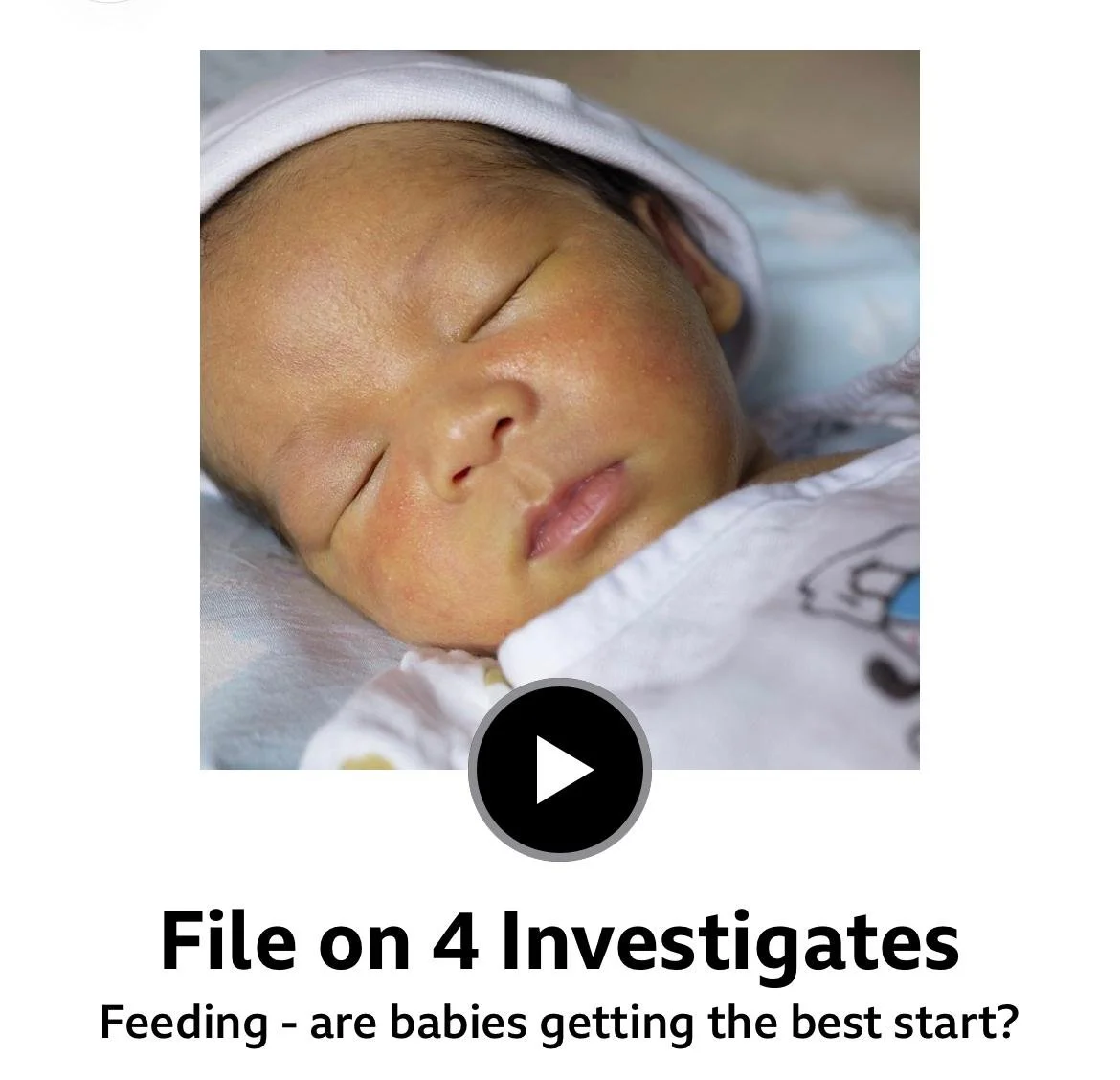
BBC File on 4 Investigates asks why so many newborn babies are being taken back to hospital in the days after birth with jaundice and feeding difficulties. It hears from women who describe being set up to fail by a lack of breastfeeding support, and asks whether gaps in what we know about low and delayed milk supply are leaving mothers and babies without the care they need.
These are the questions at the heart of our report: no national body has examined how often feeding difficulties lie behind these admissions or how many could be prevented. Feed’s Chief Executive, Clare Murphy, spoke to the programme about the importance of giving women the information they need to make informed feeding decisions.
WHAT GOOD LOOKS LIKE
Care that trusts women.
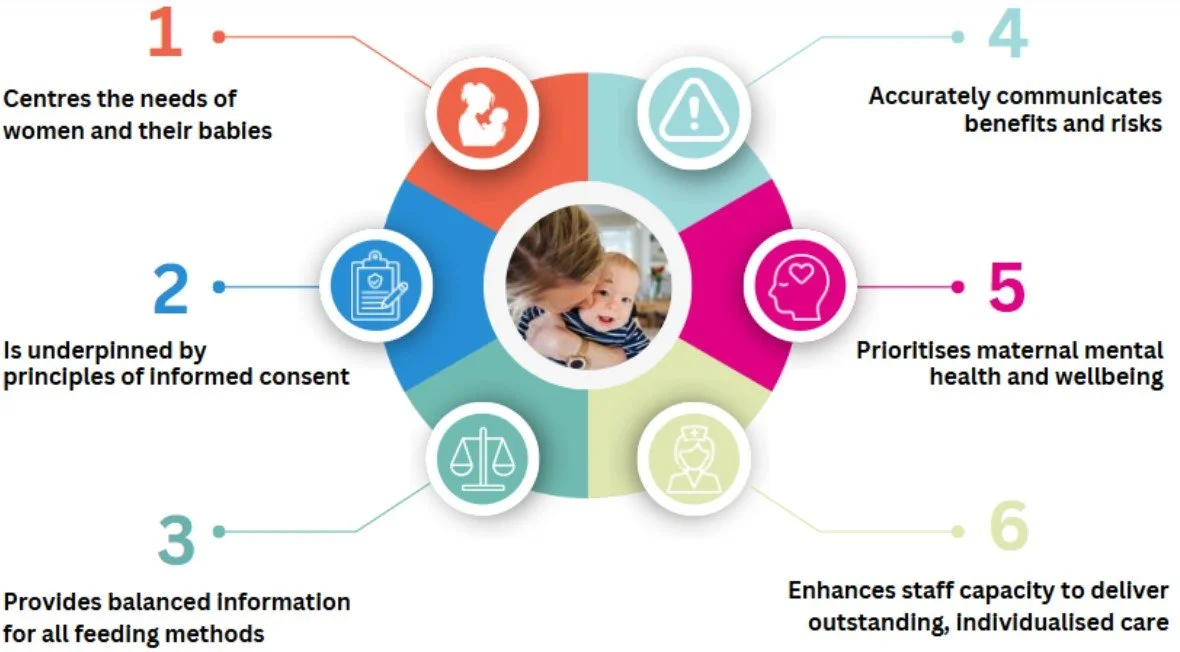
Every woman has a right to be Told in time.
TAKE ACTION
Sign the petition
Overhaul NHS infant feeding policy to support women and babies
We're asking the Health Secretary for an NHS infant feeding framework built on women's autonomy and choice: honest information about breastfeeding challenges, balanced advice on formula, combination feeding as a valid option, and women's mental and physical health taken into account.
Our petition began by calling for an end to the guilt and shame surrounding infant feeding, and for women to receive balanced information and support. Our new evidence strengthens that call and makes the case for wider reform. Add your name to help us demand change.
750+
people have already signed.
Find who to write to
Who it's going to
Your email
We've written it for you. The pink part in square brackets is for your own experience: replace it with a sentence or two about what happened to you, or leave it as it is and we'll take it out.
You can change anything you like.
The email ends with this request, which changes depending on who you're sending it to:
Elected representatives only reply to their own constituents, so their office needs this to check. It goes to them, not to Feed.
Check it and send it from your own email
You can still edit the email after it opens. Pick whichever you use. If your email opens blank or cut short, use Copy instead and paste it into a new email.
Sent it? Let us know
It helps us see which representatives have heard from their constituents, so we know where to follow up. We record your constituency, not your message.
One more thing that makes a real difference: ask someone else to write to their representatives too.